See People, Not Problems

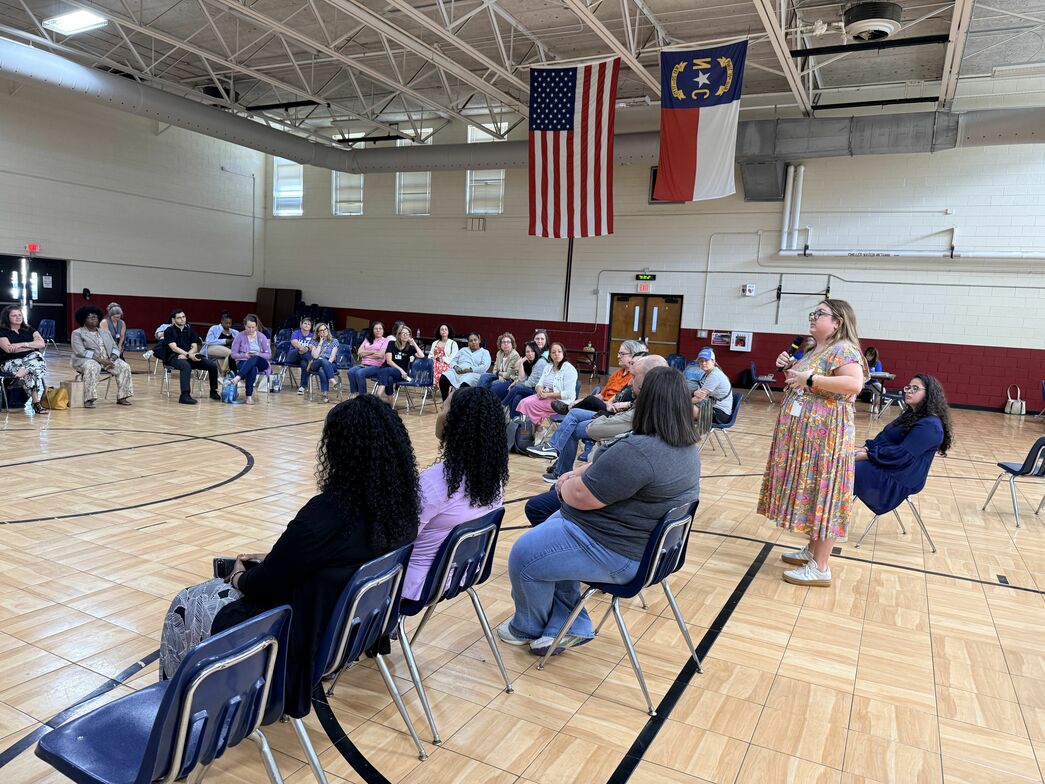
Poverty is often discussed through numbers, charts, percentages, and political conversations. On Tuesday, our staff participated in a poverty simulation at Mitchell Community College, and while there were certainly statistics involved, what stayed with me most was not a number. It was a feeling.
Stress. Frustration. Anxiety.
For a few hours, I became a 13-year-old twin trying to navigate life in a family struggling to survive. In the simulation, I was trying to help keep a roof over our heads and the lights on alongside my older brother and twin sister. I even had a “homework assignment” about poverty, but I got suspended from school that day and had to get the answers when I returned the next week. While I may have eventually learned the right answers on paper, the real lesson came from experiencing how overwhelming life can feel when every decision has consequences because there is never enough time, enough money, enough transportation, enough childcare, or enough energy.
The truth is, I have lived a very privileged life. I have never gone without the things I needed. I have always had food on the table, a place to live, people who loved and supported me, and opportunities that many people never receive. The simulation reminded me that many people carry burdens I have never personally had to carry, and yet they keep showing up every single day doing the best they can. That is deeply humbling.
One of the things I learned is that poverty in the United States is officially measured by determining the amount of money needed to purchase the lowest-cost nutritionally adequate diet identified by the USDA and multiplying it by three. The poverty threshold for a family of four is around $26,500 a year.
But poverty is more than a formula or statistic.
Poverty is deciding whether to pay the power bill or buy groceries.
Poverty is missing work because transportation falls through.
Poverty is paying outrageous fees because you cannot afford another option.
Poverty is working full-time and still falling behind.
Poverty is carrying constant stress while trying to make good decisions when you are exhausted.
The federal minimum wage is still $7.25 an hour. That means someone working full-time earns around $1,257 a month. It quickly becomes clear how difficult it is for families to stay ahead financially, especially when one unexpected expense can cause everything to unravel.
One fact that may be surprising was learning that the highest poverty rates in the United States are found in rural areas. Sometimes we imagine poverty as something far away in large cities, but poverty exists right here in our communities, often hidden behind silence or people simply trying to hold life together.
During the simulation, we talked about the difference between sympathy and empathy.
Sympathy often means wanting to do something for someone or fix things for them. While it usually comes from a caring place, it can unintentionally take away a person’s choices, dignity, and voice. Sometimes we rush in trying to rescue people when what they really need is someone willing to walk beside them.
Empathy is different.
Empathy means doing with people instead of for people. It means listening. It means helping in ways that allow people to maintain dignity and agency over their own lives. It means recognizing that people are not projects to fix but human beings created in the image of God.
Jesus modeled empathy constantly. He sat at tables with people others ignored. He listened to stories. He asked questions. He saw people beyond their circumstances. Again and again, Jesus restored dignity before anything else.
The Bible has a great deal to say about poverty—not simply as a political issue, but as a spiritual one.
Proverbs reminds us: “Whoever is kind to the poor lends to the Lord.”
Jesus says in Matthew 25: “Whatever you did for one of the least of these brothers and sisters of mine, you did for me.”
Scripture consistently reminds us that people matter deeply to God, especially those the world often overlooks.
One of realizations is how quickly judgment disappears when you begin to understand how complicated life can become. It is easy to ask, “Why don’t they just…?” until obstacle after obstacle starts piling up faster than you can solve them.
The simulation reminded me how expensive it is to be poor. A late fee becomes another late fee. A payday loan can carry a 400% interest rate. Missing one day of work can create a domino effect that impacts an entire family. And through it all, many people carry shame alongside their struggle.
As Christians, I believe we are called not simply to notice poverty but to truly see people. To listen before assuming. To care without judging. To offer support without taking away dignity.
I left the simulation grateful for the experience, humbled by what I learned, and reminded that ministry is not just about preaching good news. It is about living it. See you Sunday!
Peace, Pastor Tracy