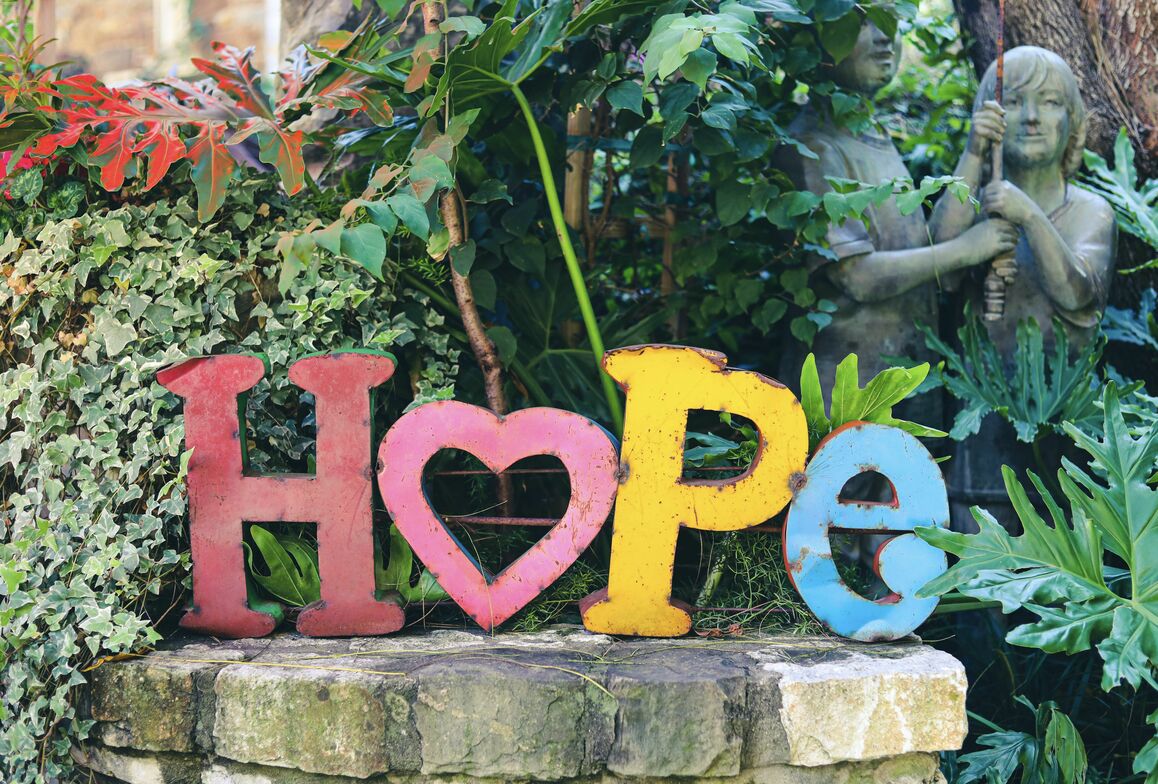
Hope is not always easy. For some of us, it feels far safer not to hope too much, not to expect too much, and not to risk disappointment. I remember hearing as a child, “Don’t get your hopes up,” and I think I took that advice a little too deeply. Over time, protecting myself from disappointment began to feel wiser than opening myself to possibility. But a life without hope can become very small. It can narrow our vision, drain our joy, and keep us from noticing the ways God may still be at work around us.
A friend of mine, a chaplain, once gave me advice that was both funny and memorable. She said that when negative thoughts begin circling, sometimes you need to interrupt them. Her suggestion was to think of the song “Baby Shark” and imagine a little shark eating those negative thoughts away. Silly as it sounds, there is wisdom in that. Sometimes we need something simple and concrete to stop our minds from spiraling deeper into fear, dread, or despair. Negative thoughts may visit us, but they do not have to rule us or tell us the truth about who we are.
That is one reason I have appreciated the work of Dr. Chan Hellman, who writes about the science of hope. He reminds us that hope is not wishful thinking or pretending everything is fine. Hope is believing that the future can be better and trusting that there are pathways that can lead us there. It is not denial. It is courage. It is the quiet refusal to believe that this moment of difficulty is the end of the story.
His newer book, "Catching Hope: The Hidden Spiritual Wisdom of Fishing", takes that idea even deeper in a way that feels both practical and spiritual. The image of “catching hope” is powerful—it reminds us that hope is not something we force or manufacture, but something we learn to notice, nurture, and receive. Drawing on the rhythms of fishing, he reflects on how hope often grows in stillness, in patience, in showing up again and again even when nothing seems to be happening. Fishing teaches you to wait, to pay attention, to trust what you cannot yet see beneath the surface—and that is not unlike the life of faith.
There is something deeply comforting in that. Hope does not always arrive in big, dramatic moments. Often it comes quietly. It comes in small shifts of perspective, in a deep breath, in a word of encouragement, in the decision to try again. It comes in trusting that God is at work even when the evidence is not yet visible.
Hope matters. It steadies us. It keeps us open to grace. It reminds us that despair is not the only option and that God is often doing more than we can imagine. So I invite you to think about hope today. What has tried to steal it from you? What helps it grow again? And where might God be asking you not to give up before grace has a chance to do its work? See you Palm Sunday!
Peace, Pastor Tracy