Tired of Fear

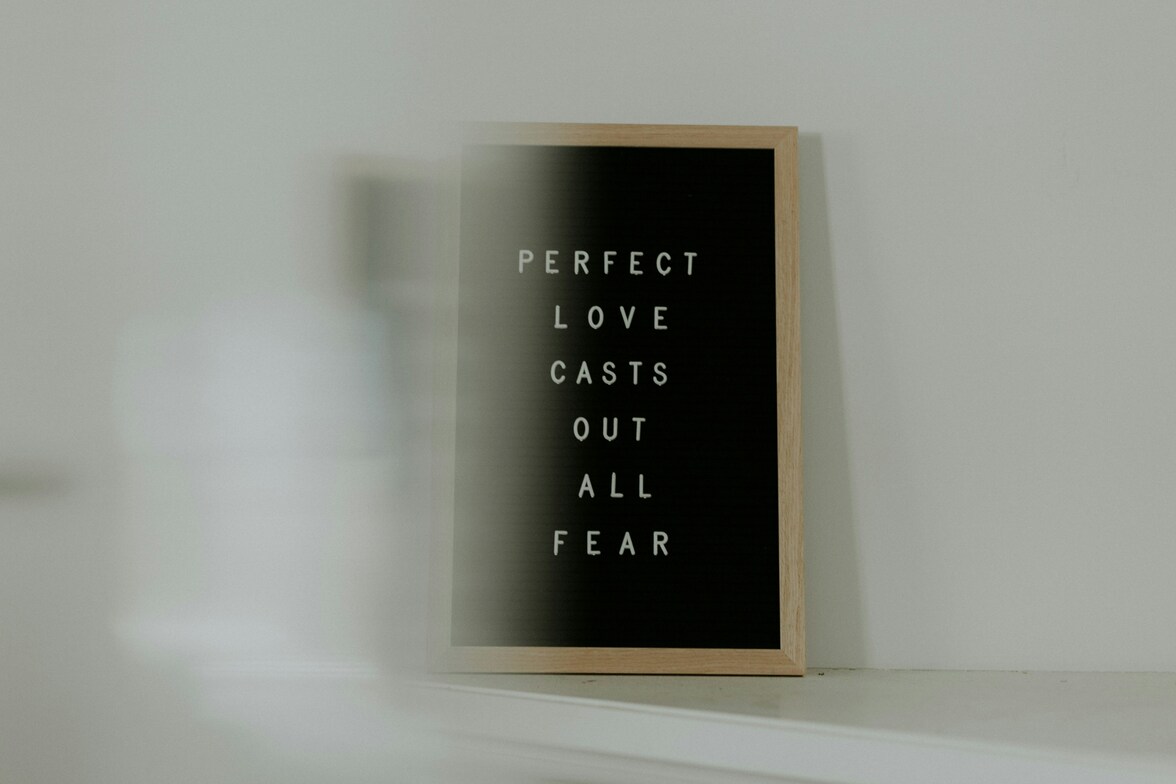
Fear is such a powerful emotion. It can keep us safe, and sometimes we need it to do exactly that. Fear tells us when something is dangerous. It makes us pay attention. But fear can also keep us stuck. Fear keeps us looking backward instead of forward. Fear keeps us from taking risks. Fear keeps us holding onto what we know simply because we know it. Fear can paralyze us. Fear can even keep us from truly depending on God. And if I am truthful, I am tired of fear.
Nelson Mandela once said, “I learned that courage was not the absence of fear, but the triumph over it.” I like that because sometimes we make the mistake of thinking courageous people simply aren’t afraid. I don’t believe that is true. Courageous people experience fear just like everyone else. Courage is deciding that fear is not going to make every decision for us. There is a difference between listening to fear when it warns us about real danger and allowing fear to become the voice that controls our lives.
I have been afraid plenty of times in my ministry. I have been afraid to speak up when I was the only person in the room who saw something differently. There is something intimidating about looking around a room and realizing everyone seems to be moving in one direction while something inside you is saying, “I don’t think this is the way to go,” or simply, “I see this differently.” It is much easier to stay quiet. It is much easier to go along. Speaking up means risking being misunderstood, criticized, dismissed, or labeled as difficult. Sometimes courage is nothing more dramatic than finding your voice when it would be much easier to remain silent.
There have also been times in my ministry when fear has been much more personal. I have experienced people who wanted to hurt me simply because I am a woman doing what I believe God called me to do. There have been moments when being a pastor meant knowing that no matter what I said, how hard I worked, how much I cared, or how faithfully I tried to serve, the fact that I was a woman standing in the pulpit was enough to make someone angry. There have been times when that has made me afraid. Yet here I am. Still preaching. Still serving. Still answering the call God placed on my life.
And ministry isn’t the only place where I experience fear. There are things in my life that frighten me because of experiences I have had that nobody knows about but me. I imagine most of us have those things. Fears we don’t post about. Fears we don’t talk about over dinner. Fears we may not even share with the people closest to us. Sometimes we pray about them. Sometimes we worry about them at two o’clock in the morning. Sometimes we push them into the back of our minds and hope they will stay there. Faith doesn’t mean those fears magically disappear.
Fear also affects the way we relate to one another, and I see that a lot in churches. People are sometimes afraid to say what they really think because they don’t want to hurt someone’s feelings, make someone angry, create conflict, or be seen as the difficult person. So instead of talking directly to one another, they stay quiet. Or they talk to someone else about it. Or they smile and say everything is fine when it isn’t. We can convince ourselves that we are keeping the peace, but there is a difference between keeping the peace and making peace. Keeping the peace can simply mean avoiding whatever makes us uncomfortable. Making peace requires honesty, courage, and sometimes a difficult conversation.
What I have noticed is that when people are so afraid of hurting someone that they won’t tell the truth, they often end up living out the very fear they were trying to avoid. The truth has a way of showing up eventually, sometimes in our words, sometimes in our actions, and sometimes in our silence. Churches are communities of human beings, so of course we are going to disagree. We are going to see things differently. We are going to misunderstand one another. We are even going to hurt one another sometimes. Being the church doesn’t mean we never have conflict. It means we should learn how to move through conflict differently. Jesus didn’t call us to pretend everything is fine. Jesus called us to love one another, and sometimes love requires enough courage to tell the truth and enough humility to hear it.
I wonder how much of our lives and our churches can be shaped by fear without us even realizing it. How many conversations have we avoided? How many ideas have we never tried? How many times have we known something needed to change but decided what we already knew was safer than stepping into something we didn’t? How many decisions have we made because we were afraid someone would get upset? How many times have we been afraid to try something because it might fail? How often have we called something wisdom or caution when underneath it all we were simply afraid?
The Bible is filled with frightened people. Moses was afraid. The Israelites were afraid. The prophets were afraid. The disciples were afraid. Peter was afraid when he noticed the wind and the waves. The women who came to the empty tomb experienced fear. Scripture doesn’t give us a collection of fearless people. It gives us ordinary human beings who encountered God right in the middle of their fear. Maybe that is why some version of “Do not be afraid” appears again and again throughout Scripture.
What I find important is that God doesn’t usually say, “Don’t be afraid because nothing bad is going to happen.” That wouldn’t even be true. Difficult things do happen. People disappoint us. Plans fail. Relationships change. People can be cruel. We make mistakes. Sometimes the very thing we feared actually happens. Instead, the promise is something much deeper: Do not be afraid, because I am with you.
God’s presence doesn’t mean I will always be protected from disappointment, criticism, rejection, failure, or pain. God’s presence means none of those things gets to have the final word.
I think sometimes we would prefer certainty over faith. I know I would. Just give me the whole plan, God. Show me exactly what is going to happen. Tell me how everyone will respond. Let me know whether this is going to work before I risk anything. Give me a guarantee, and then I will take the step. The problem is that isn’t really faith. Faith is taking the next step without knowing exactly where the road will lead because we trust that God walks the road with us.
Fear also has a way of keeping us tied to the past. The past can feel safer because we already know how that story turned out. We know what worked. We know what didn’t. We know where the bumps in the road were. The future doesn’t give us that luxury. The future requires trust. But God is not only the God of what has been. God is the God of what is and what will be. God is already present in the places we are afraid to go.
I don’t know about you, but I am tired of fear. I am tired of fear deciding what is possible. I am tired of fear telling us to remain silent when something needs to be said. I am tired of fear convincing us that familiar is always better. I am tired of fear keeping us from being honest with one another. I am tired of fear keeping churches stuck because someone might get upset. I am tired of fear keeping us from taking risks, dreaming new dreams, trying something different, and trusting God enough to move forward.
That doesn’t mean I won’t be afraid tomorrow. I probably will be. There are fears I have overcome and fears I am still working through. There are fears I can tell you about and fears that belong only between God and me. Faith doesn’t require me to pretend those fears aren’t there.
Maybe courage isn’t reaching some magical place where we aren’t afraid anymore. Maybe courage is getting up in the morning, acknowledging the fear, and refusing to give it control of the day. Maybe courage is speaking when your voice shakes. Maybe courage is walking into the room when you know you may be the only person who sees things differently. Maybe courage is having the conversation you have been avoiding. Maybe courage is continuing to answer God’s call when others question whether you should have been called in the first place. And sometimes courage is simply taking one more step when you cannot see very far ahead.
Maybe the opposite of fear isn’t certainty. Maybe it is trust.
Trust that God is with us. Trust that we can disagree without destroying one another. Trust that failure isn’t the end of the story. Trust that there are possibilities beyond what we can see right now. Trust that we don’t have to know everything about tomorrow to take one faithful step today.
I am tired of fear. I am still afraid sometimes. But I don’t want fear deciding where I go from here.
And I don’t want fear deciding where the church goes either. See you Sunday!
Peace, Pastor Tracy